
How It Works

Our Mission
Our project works by deploying a drone over a hazardous area while carrying out SAR (Search-And-Rescue) operations. We programmed cutting-edge AI technology into the drone to detect motion and life. This is powered by:
-
ONNX Runtime (AI inference)
-
OpenCV (Computer vision)
-
Microsoft ML.NET (Machine learning)
-
.NET 8.0 (Platform)
6 Core AI Models:
-
Thermal Detection (94%) - Heat signature analysis
-
Silhouette Detection (91%) - Human shape recognition
-
Motion Analysis (88%) - Movement pattern tracking
-
Hazard Detection (89%) - Environmental hazards
-
Multi-Sensor Fusion (95%) - Sensor data combination
-
Deep Pattern Recognition (93%) - Complex pattern analysis
Training Data:
-
10,000+ simulated thermal images
-
5,000+ human silhouette variations
-
3,000+ hazard detection examples
-
Real-world SAR scenario patterns
Component Information
Hardware Used
ESP32 Board: $21.99
CO₂ Sensor: $31.00
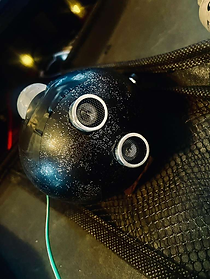
Ultrasonic Sensor: $4.99
PIR Motion Sensor: $3.99
Charging Module: $5.79
Boost Converter: $6.49
Mini Switch: $1.50

Endorsed by: Alfa Drones USA and Andrew Flor (Aviation High School Teacher)
Team Members
Our team members share their experiences and success stories working on BeaconSAR

I am Saheed Dela Cruz, a student at Aviation High School in New York City and a member of the Beacon SAR team, where I help develop an AI-powered search and rescue and environmental monitoring system. I am passionate about using drones, artificial intelligence, and smart sensor networks to solve real world problems like disaster response and pollution tracking. My role involves assisting with system design, integrating sensors, and supporting project development. I am interested in aviation maintenance, robotics, and engineering, and I enjoy building technology that can make communities safer, smarter, and more connected through innovative and practical solutions everyday.
Saheed Dela Cruz
Researcher, Engineer, Project Leader
Other Projects and Ideas
Research Paper
Pollution Detection
One of our ideas for our drone is pollution detection. For example, the drone scans industrial areas, rivers, and lakes, and its sensors detect unusual gases, air-quality changes, and temperature differences.
The AI can detect pollution hotspots.
Climate Research
Another idea for our drone is the ability to do climate research. Our idea is that the drone collects environmental data and can track glacier changes, coastal erosion, and extreme weather effects
Contact Us
Have a question or need more information? Reach out to us and we'll be happy to assist you.